
Prepare to dive into the sizzling topic of Urban Heat Island Effect Reduction! This phenomenon, where cities become heat traps, is no laughing matter. But fear not, for we’ve got a bag of cool strategies to turn our urban jungles into oases of freshness.
From reflective rooftops to leafy havens, we’ll explore how to beat the heat and create cities that are not only livable but downright delightful. So, buckle up and get ready to witness the transformation of our urban landscapes into cooler, healthier, and more vibrant spaces.
Introduction
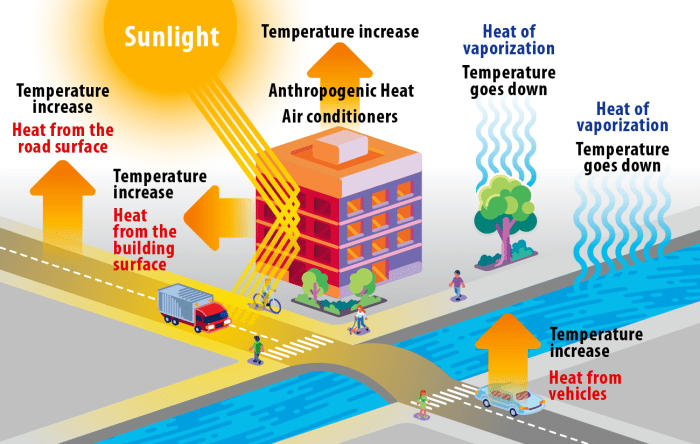
The urban heat island effect refers to the phenomenon where urban areas experience higher temperatures compared to their surrounding rural areas. This effect is caused by a combination of factors, including the presence of buildings and infrastructure, which absorb and release heat, and the lack of vegetation, which provides cooling through evapotranspiration.
The urban heat island effect can have a number of negative consequences, including increased energy consumption for cooling, air pollution, and heat-related illnesses. It can also contribute to climate change by trapping heat in urban areas.
Causes
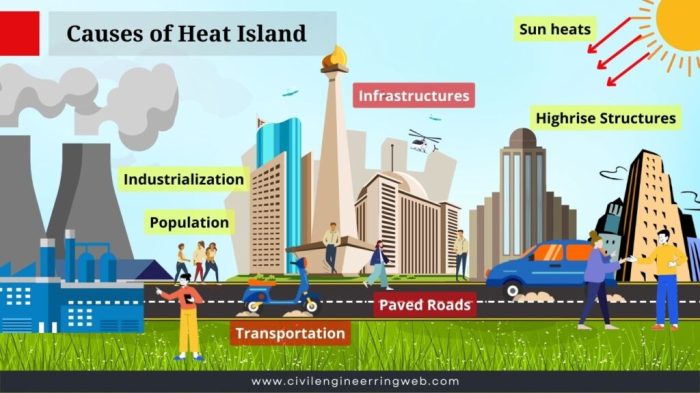
- Buildings and infrastructure:Buildings and infrastructure, such as roads and parking lots, absorb and release heat, contributing to the urban heat island effect. Dark-colored surfaces, such as asphalt and concrete, absorb more heat than light-colored surfaces, exacerbating the effect.
- Lack of vegetation:Vegetation provides cooling through evapotranspiration, the process by which plants release water vapor into the atmosphere. Urban areas often have less vegetation than rural areas, which reduces the cooling effect and contributes to the urban heat island effect.
- Anthropogenic heat:Human activities, such as transportation and industrial processes, generate heat that can contribute to the urban heat island effect.
Consequences
- Increased energy consumption:The urban heat island effect can lead to increased energy consumption for cooling, as buildings and infrastructure need to be cooled to maintain comfortable temperatures.
- Air pollution:The urban heat island effect can contribute to air pollution by trapping pollutants in urban areas. Higher temperatures can also increase the formation of ground-level ozone, a harmful air pollutant.
- Heat-related illnesses:The urban heat island effect can increase the risk of heat-related illnesses, such as heat stroke and heat exhaustion.
- Climate change:The urban heat island effect can contribute to climate change by trapping heat in urban areas. This heat can then be released into the atmosphere, contributing to global warming.
Strategies for Reducing the Urban Heat Island Effect
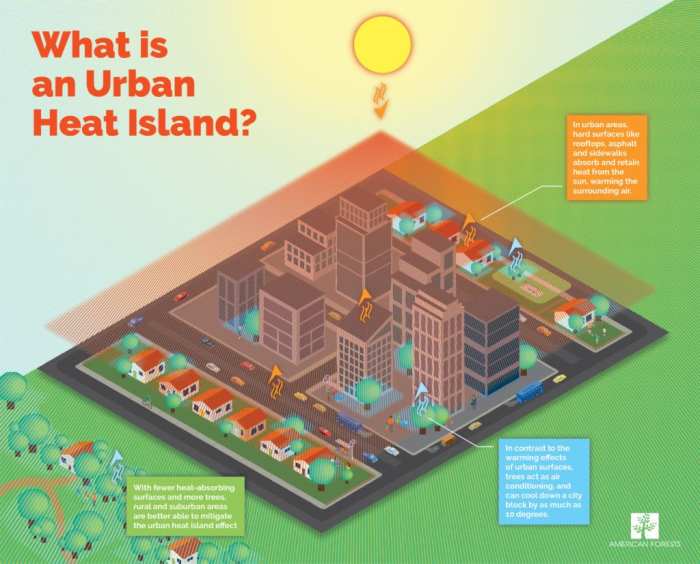
The urban heat island effect is a serious problem that can lead to a number of health and environmental issues. Fortunately, there are a number of strategies that can be used to reduce the urban heat island effect, including the use of reflective materials on buildings and roads, increasing green spaces and tree cover, and implementing cool roofs and pavements.
Reflective Materials
Reflective materials can be used on buildings and roads to reflect sunlight away from the city, reducing the amount of heat that is absorbed. This can be done using a variety of materials, such as white paint, reflective tiles, and cool roofs.
Reflective materials can be especially effective in reducing the heat island effect in areas with a lot of sunlight.
Green Spaces and Tree Cover
Green spaces and tree cover can help to reduce the urban heat island effect by providing shade and evapotranspiration. Shade from trees can help to cool buildings and streets, while evapotranspiration can help to cool the air. Increasing green spaces and tree cover can also help to improve air quality and reduce noise pollution.
Cool Roofs and Pavements
Cool roofs and pavements are designed to reflect sunlight and emit less heat than traditional materials. Cool roofs are typically made from white or reflective materials, while cool pavements are made from materials that absorb less heat. Cool roofs and pavements can help to reduce the urban heat island effect and can also save energy by reducing the need for air conditioning.
Successful Urban Heat Island Mitigation Projects
There are a number of successful urban heat island mitigation projects that have been implemented around the world. One example is the Cool Roofs and Cool Pavements program in Los Angeles, which has helped to reduce the city’s average temperature by 2 degrees Fahrenheit.
Another example is the Green Roofs for Healthy Cities program in Toronto, which has helped to reduce the city’s heat island effect by 5 degrees Fahrenheit.
Role of Urban Planning in Mitigating the Urban Heat Island Effect
Urban planning plays a crucial role in combating the urban heat island effect. By incorporating heat island mitigation strategies into urban planning, cities can create more livable and sustainable environments.
In the urban jungle, we face the pesky Urban heat island effect. But fear not, for a touch of floral flair can cool things down. Check out Jenis Bunga untuk Pohon Rindang: Menebar Pesona di Bawah Naungan for a blooming solution.
These leafy giants and their colorful companions will cast a refreshing shade, reducing the city’s sizzling summer vibes and leaving us with a smile as bright as their petals.
Zoning and building codes are powerful tools that can be used to promote heat-reducing measures. For example, zoning can be used to encourage the development of parks and green spaces, which provide shade and cool the air. Building codes can be used to require the use of reflective materials on roofs and pavements, which reduce heat absorption.
Urban heat island effect reduction has become a global concern, with cities experiencing higher temperatures than surrounding rural areas. One effective solution is to increase urban greenery, especially trees. Rawat Pohon Rindang Halaman Rumah Makin Segar dan Rindang provides valuable tips on how to care for trees in your yard, making them lush and shady.
By promoting tree health, we can reduce the urban heat island effect and create a more comfortable and sustainable living environment.
Successful Implementation of Heat Island Mitigation Measures through Urban Planning
Several cities have successfully implemented heat island mitigation measures through urban planning. For example, Toronto, Canada, has implemented a Green Roof Bylaw, which requires all new buildings with a roof area of 2,000 square meters or more to have a green roof.
This bylaw has helped to reduce the city’s heat island effect and improve air quality.
Another example is Melbourne, Australia, which has implemented a Cool City Strategy. This strategy includes a number of measures to reduce the city’s heat island effect, such as increasing the number of trees and green spaces, using reflective materials on roofs and pavements, and encouraging the use of public transportation.
Technologies for Reducing the Urban Heat Island Effect

In the relentless pursuit of cooling our urban jungles, technology has stepped up to the plate with a repertoire of ingenious solutions. From reflective roofs that bounce back the sun’s fiery embrace to pavements that soak up heat like a sponge, the urban heat island effect is getting a technological makeover.
Cool Roofs and Cool Pavements
Imagine your roof as a giant sunshade. Cool roofs, adorned with reflective materials, do just that, sending the sun’s rays packing. They’re like tiny mirrors, scattering heat away from buildings, reducing indoor temperatures, and lowering energy consumption for cooling. Cool pavements, on the other hand, are paving the way for cooler cities.
Made with special materials that absorb less heat, they keep the ground beneath our feet from turning into a scorching skillet.
Energy-Efficient Appliances and Lighting
Every appliance and lightbulb in our homes and offices is a potential heat generator. By switching to energy-efficient models, we can reduce the amount of heat emitted into our living spaces. These clever gadgets use less energy to perform the same tasks, minimizing the release of excess heat.
In the battle against urban heat island effects, we must employ every weapon in our arsenal. From increasing green spaces to implementing cool roofs, we must explore all avenues to mitigate this growing problem. One such avenue lies in the realm of golf courses.
Lapangan Golf di Bali: Surga Pemula untuk Mengasah Ayunan not only provide recreational opportunities but also serve as verdant oases that can help reduce heat island effects. By incorporating these sprawling greens into our urban landscapes, we can create cooler, more livable cities while simultaneously indulging in the leisurely pursuit of golf.
It’s like having a secret weapon to cool your home without even lifting a finger.
Innovative Technologies for Reducing Urban Heat, Urban heat island effect reduction
The realm of urban heat reduction is a hotbed for innovation. From misting systems that spray refreshing water droplets to create evaporative cooling to green roofs that transform buildings into verdant oases, there’s no shortage of creative solutions. These technologies are like superheroes in the fight against urban heat, each with its own unique superpower to keep our cities cool and comfortable.
Social and Economic Benefits of Reducing the Urban Heat Island Effect: Urban Heat Island Effect Reduction
Mitigating the urban heat island effect offers a plethora of social and economic advantages that enhance the quality of life in cities. These benefits include improved air quality, reduced heat-related illnesses, decreased energy consumption, and increased tourism.
Improved Air Quality
Urban heat islands can trap pollutants near the ground, exacerbating air quality issues. By implementing heat island mitigation strategies, such as increasing green spaces and using reflective materials on buildings, cities can reduce air pollution and improve public health.
Reduced Heat-Related Illnesses
Extreme heat can lead to various health problems, including heat exhaustion, heat stroke, and even death. Heat island mitigation measures can lower urban temperatures, reducing the risk of heat-related illnesses and improving the well-being of city dwellers.
One of the many ways to mitigate the urban heat island effect is by increasing the amount of green spaces in urban areas. These green spaces can be in the form of parks, gardens, or even golf courses. Speaking of golf courses, have you heard of the Lapangan Golf Bali Pemandangan Laut ? This stunning golf course offers breathtaking ocean views and is a great place to relax and enjoy a round of golf.
But beyond its beauty, this golf course also contributes to reducing the urban heat island effect by providing a green space in the heart of a bustling city. So, next time you’re looking for a way to cool down and enjoy the outdoors, consider visiting a golf course like Lapangan Golf Bali Pemandangan Laut.
You’ll not only have a great time, but you’ll also be doing your part to reduce the urban heat island effect.
Economic Benefits
Reducing the urban heat island effect can also yield significant economic benefits. By decreasing energy consumption for cooling, cities can save money on electricity bills. Additionally, heat island mitigation can make cities more attractive to tourists, boosting local economies.
Examples of Improved Quality of Life
Several cities have implemented heat island mitigation strategies with remarkable success. For instance, Toronto’s “Green Roof Bylaw” requires new buildings to have green roofs, which has helped reduce urban temperatures and improve air quality. In Melbourne, the “Cool City” program has implemented various heat island mitigation measures, resulting in a 2-degree Celsius decrease in city temperatures.
Final Conclusion
In the battle against urban heat, we’ve armed ourselves with a quiver of strategies. From reflective surfaces that bounce back the sun’s rays to verdant green spaces that absorb heat like a sponge, we’re turning our cities into heat-busting havens.
And let’s not forget the technological marvels like cool roofs and energy-efficient appliances that are quietly working behind the scenes to keep our urban oases cool and collected. So, as we bid farewell to the scorching urban heat, let’s embrace a future where our cities are not just places to live but thriving ecosystems that nurture our well-being and inspire us to reach for the stars.
FAQs
What’s the secret behind those shiny buildings that don’t seem to absorb heat?
Reflective materials on building surfaces bounce back sunlight, reducing heat absorption and keeping interiors cooler.
Why are trees so important in the fight against urban heat?
Trees provide shade, release moisture through transpiration, and absorb carbon dioxide, all of which contribute to cooling the urban environment.
How can urban planning help reduce the heat island effect?
By incorporating heat-reducing measures into zoning and building codes, urban planners can ensure that new developments contribute to a cooler city.
