
In today’s dynamic business landscape, organizations that prioritize training and development opportunities for their employees stand poised to reap the rewards of a highly skilled, adaptable, and motivated workforce. These initiatives serve as cornerstones of organizational success, propelling individuals and teams toward peak performance and fostering a culture of continuous learning.
Training and development programs empower employees with the knowledge, skills, and abilities necessary to excel in their roles, drive innovation, and contribute meaningfully to the organization’s objectives. By investing in their human capital, organizations unlock a wealth of benefits, including enhanced productivity, improved employee engagement, and reduced turnover.
Importance of Training and Development Opportunities
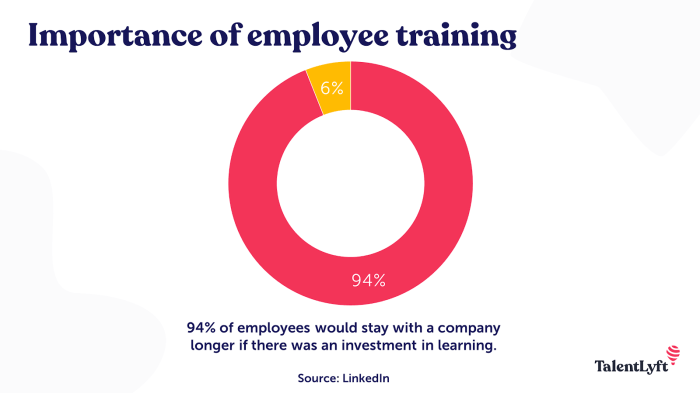
Training and development programs are crucial for organizations to enhance their workforce’s skills, knowledge, and performance. They empower employees to adapt to changing technologies, industry trends, and customer demands, leading to increased productivity, innovation, and competitiveness. Organizations that prioritize training and development see improved employee engagement, job satisfaction, and retention.
Examples of Successful Training and Development Programs
Google’s comprehensive training and development programs include the Google Academy for Ads, which offers certifications and courses to enhance employees’ digital marketing skills. This program has contributed to Google’s continued dominance in the online advertising market.
Microsoft
Microsoft’s Learning and Development Center provides a wide range of training programs, including technical certifications, leadership development courses, and soft skills workshops. This investment in employee development has helped Microsoft maintain its position as a leading technology innovator.
Amazon
Amazon’s Career Choice program offers employees up to $12,000 in tuition assistance to pursue degrees or certifications in high-demand fields. This program has helped Amazon attract and retain talented employees and build a highly skilled workforce.
Types of Training and Development Opportunities
Training and development opportunities provide employees with the knowledge and skills they need to excel in their current roles and prepare for future career advancements. These opportunities can take various forms, each with its own advantages and disadvantages.
Training and Development Methods
There are several types of training and development opportunities available to employees, categorized based on their delivery method and formality.
On-the-Job Training
On-the-job training (OJT) involves learning and developing skills while performing actual work duties. This method is commonly used to train new employees, as they can observe and learn from experienced colleagues.
Off-the-Job Training
Off-the-job training takes place outside of the workplace and includes various methods such as classroom training, online courses, and workshops. This method allows employees to focus solely on learning without the distractions of their regular work duties.
Formal Education
Formal education refers to structured learning programs offered by accredited institutions such as colleges and universities. These programs provide employees with theoretical knowledge and practical skills relevant to their field.
Informal Learning
Informal learning involves acquiring knowledge and skills through self-directed activities such as reading books, articles, or blogs; attending conferences or seminars; or participating in online forums and communities.
Comparison of Training and Development Methods
The following table compares and contrasts the advantages and disadvantages of various training and development methods:| Method | Advantages | Disadvantages ||—|—|—|| On-the-Job Training | * Practical experience * Immediate application of skills * Hands-on learning | * Limited to specific tasks * May lack structured curriculum * May disrupt ongoing work || Off-the-Job Training | * Structured curriculum * Controlled learning environment * Opportunity for in-depth learning | * May not be directly applicable to the job * May be costly and time-consuming || Formal Education | * Comprehensive knowledge * Recognized credentials * Opportunity for career advancement | * May be expensive and time-consuming * May not be directly relevant to the job || Informal Learning | * Flexibility * Self-directed * Convenient | * Lack of structure * May not be recognized by employers * May not provide comprehensive knowledge |
Identifying Training and Development Needs
Recognizing training and development requirements is crucial for enhancing employee performance and organizational success. Several methods are employed to identify these needs:
Performance Appraisals
Performance appraisals evaluate employees’ strengths, weaknesses, and areas for improvement. They provide valuable insights into training needs and help create personalized development plans.
Skills Gap Analysis
Skills gap analysis compares current employee skills with those required for their roles. This helps identify skill deficiencies and determine training programs to bridge the gaps.
Feedback from Employees and Managers
Feedback from employees and managers offers valuable insights into training needs. Employees can identify areas where they need improvement, while managers can assess team members’ strengths and weaknesses.
Step-by-Step Guide for Conducting a Comprehensive Training Needs Assessment
- Define Objectives: Clarify the purpose of the assessment and align it with organizational goals.
- Gather Data: Collect information through performance appraisals, skills gap analysis, and feedback from employees and managers.
- Analyze Data: Review the gathered data to identify patterns, trends, and common areas for improvement.
- Prioritize Needs: Rank the identified needs based on their impact on performance and organizational goals.
- Develop Recommendations: Create a comprehensive list of training and development programs to address the identified needs.
- Implement and Evaluate: Implement the training programs and evaluate their effectiveness in meeting the identified needs.
Designing and Developing Training Programs
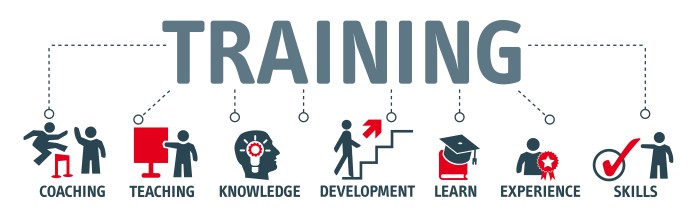
Designing and developing effective training programs are crucial for successful training and development initiatives. Well-structured programs ensure that training objectives are met, participants are engaged, and skills are effectively transferred to the workplace.
Key elements of effective training program design include:
- Clear Objectives: Defining specific, measurable, achievable, relevant, and time-bound (SMART) objectives for the training program.
- Appropriate Content: Selecting content that aligns with the training objectives and the needs of the participants.
- Engaging Delivery Methods: Choosing delivery methods that cater to different learning styles and preferences, such as instructor-led training, online learning, or blended learning.
- Evaluation Mechanisms: Incorporating formative and summative evaluation mechanisms to assess the effectiveness of the training program and make necessary improvements.
Best Practices for Developing Engaging and Interactive Training Materials
To create engaging and interactive training materials, consider the following best practices:
- Variety of Formats: Use a variety of formats such as videos, infographics, simulations, and case studies to keep participants engaged.
- Interactive Elements: Incorporate interactive elements such as quizzes, polls, and discussions to encourage active participation.
- Real-World Examples: Include real-world examples, case studies, and scenarios to make the training relatable and applicable to the participants’ work.
- Visual Aids: Utilize visual aids such as charts, graphs, and images to enhance understanding and retention.
- Customization: Tailor the training materials to the specific needs and learning styles of the participants.
Implementing and Evaluating Training Programs
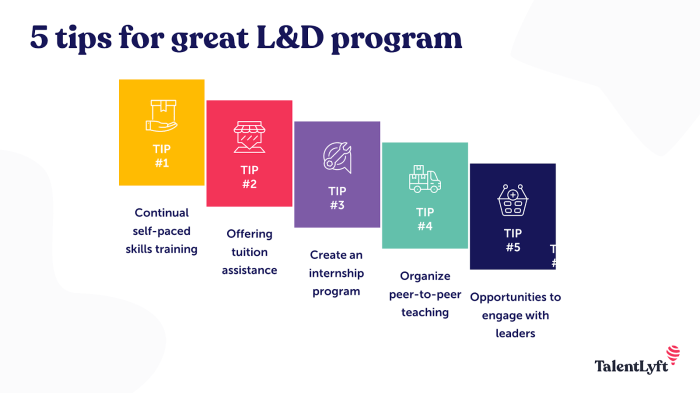
The implementation and evaluation of training programs are crucial steps in ensuring that the training is effective and achieves its desired outcomes. It involves careful planning, execution, and assessment to ensure that the training is delivered as intended and that participants gain the necessary knowledge, skills, and abilities.
Implementing a training program involves several key steps:
Scheduling and Logistics
Effective scheduling and logistics are essential for the smooth implementation of a training program. This includes:
- Selecting appropriate training dates and times that accommodate the schedules of participants and trainers.
- Arranging suitable training venues that can accommodate the number of participants and provide the necessary facilities and equipment.
- Developing a detailed training schedule that Artikels the topics to be covered, the duration of each session, and the sequence of activities.
- Providing participants with clear instructions and materials well in advance of the training program, including course materials, handouts, and any required software or equipment.
Resource Allocation
Adequate resources are necessary to ensure the successful implementation of a training program. This includes:
- Allocating sufficient budget to cover the costs of training materials, venue rental, trainer fees, and other expenses.
- Recruiting and selecting qualified trainers who have the expertise and experience to deliver the training effectively.
- Providing participants with access to appropriate learning resources, such as books, articles, online resources, and hands-on training materials.
Evaluating Training Programs
Evaluating the effectiveness of training programs is essential to determine whether the training has achieved its intended outcomes. Various methods can be used to evaluate training programs, including:
- Kirkpatrick’s Model: This widely used model evaluates training effectiveness at four levels: reaction, learning, behavior, and results. It assesses participants’ reactions to the training, the extent to which they have acquired new knowledge and skills, whether they have applied these skills on the job, and the overall impact of the training on organizational performance.
- Return on Investment (ROI) Calculations: ROI is a financial measure that compares the costs of training with the benefits it generates. It helps organizations determine the monetary value of the training investment and assess its profitability.
- Surveys and Feedback: Collecting feedback from participants through surveys, questionnaires, and focus groups can provide valuable insights into the effectiveness of the training program. This feedback can be used to identify areas for improvement and make necessary adjustments to future training programs.
Challenges and Trends in Training and Development

Providing training and development opportunities within organizations presents various challenges, but also offers exciting trends that can revolutionize learning and skill enhancement.
Organizations face common hurdles in offering training and development opportunities, including:
- Budget Constraints: Allocating sufficient funds for training programs can be a challenge, especially during economic downturns or when competing priorities arise.
- Time Limitations: Employees may struggle to find time away from their regular duties to attend training sessions, leading to scheduling conflicts and potential resistance.
- Resistance to Change: Some employees may be reluctant to embrace new skills or technologies, making it difficult to implement training programs effectively.
Despite these challenges, emerging trends in training and development offer promising solutions:
- Technology Integration: The use of technology, such as online learning platforms and virtual reality simulations, provides accessible and engaging training experiences.
- Personalized Learning: Tailoring training programs to individual learning styles, preferences, and skill gaps ensures more effective skill development.
- Microlearning: Breaking down training into short, digestible modules allows learners to absorb information in smaller, more manageable chunks.
Best Practices for Managing Training and Development

To effectively manage training and development programs, organizations should adopt best practices that foster a culture of continuous learning and maximize the impact of training initiatives. These practices include setting clear goals, creating a supportive learning environment, utilizing technology, and evaluating the effectiveness of training programs.
Organizations that have successfully implemented best practices in training and development management have experienced significant benefits, including increased employee engagement, improved productivity, and enhanced organizational performance.
Setting Clear Goals and Objectives
Training and development programs should be aligned with the organization’s strategic goals and objectives. Clearly defined goals and objectives provide a roadmap for the training program, ensuring that it is focused and effective. Goals should be specific, measurable, achievable, relevant, and time-bound (SMART).
Creating a Supportive Learning Environment
A supportive learning environment encourages employees to actively participate in training programs and apply their newly acquired knowledge and skills on the job. This includes providing access to resources, such as learning materials, online platforms, and mentors, as well as creating a culture of open communication and feedback.
Utilizing Technology
Technology can be a powerful tool for delivering training and development programs. E-learning platforms, virtual classrooms, and mobile learning apps offer flexibility and convenience, enabling employees to learn at their own pace and on their own schedule. Technology can also be used to track employee progress and provide personalized learning experiences.
Evaluating the Effectiveness of Training Programs
Regularly evaluating the effectiveness of training programs is essential for ensuring that they are meeting the needs of the organization and the employees. Evaluation can be conducted through surveys, performance reviews, and assessments. The results of the evaluation can then be used to make improvements to the training program and ensure that it continues to deliver value to the organization.
Case Studies of Successful Implementations
Several organizations have successfully implemented best practices in training and development management, resulting in significant benefits for their employees and the organization as a whole. Here are a few examples:
- Google: Google’s “g2g” program provides employees with opportunities for peer-to-peer learning and development. Employees can share their knowledge and expertise with colleagues through workshops, presentations, and online forums.
- Microsoft: Microsoft’s “Skillsoft Percipio” platform offers employees access to a wide range of online courses, videos, and interactive simulations. The platform also provides personalized learning recommendations based on each employee’s role and career goals.
- Amazon: Amazon’s “Career Choice” program provides employees with up to $5,250 per year to pursue further education, including college degrees, certifications, and vocational training.
Conclusion
In conclusion, training and development opportunities are the catalysts that transform individuals into invaluable assets, driving organizational growth and resilience. By embracing a culture of learning, organizations create a virtuous cycle of innovation, adaptability, and success. As the business world continues to evolve, those who prioritize the continuous development of their workforce will undoubtedly emerge as industry leaders, outpacing their competitors and securing a sustainable competitive advantage.
