
In the ever-evolving realm of global finance, the foreign exchange (Forex) market stands as a colossal arena where currencies from around the world converge and dance to the tune of economic, political, and psychological forces. As the largest and most liquid financial market, Forex presents a captivating landscape for traders, analysts, and investors seeking to decipher the intricate patterns that drive currency fluctuations.
Delving into the depths of Forex market analysis, we embark on a journey to unravel the secrets behind currency movements, uncovering the interplay of technical, fundamental, and sentiment analysis. Along this path, we’ll explore the strategies employed by traders to navigate the choppy waters of the Forex market, seeking to harness the power of market trends and seize opportunities amidst the ebb and flow of currency pairs.
Forex Market Analysis Trends

The Forex market, being the world’s largest financial market, experiences constant fluctuations and trends that traders and investors need to understand to make informed decisions. Technical analysis is a valuable tool that helps market participants identify potential trading opportunities by studying historical price data and patterns.
Technical Analysis in Forex Market
Technical analysis is the study of price movements and patterns in a financial market to identify potential trading opportunities. It involves analyzing historical price data, such as candlestick charts, moving averages, and other indicators, to predict future price movements. Technical analysts believe that market behavior tends to repeat itself, and by identifying these patterns, they can make informed decisions about when to buy or sell a currency pair.
Commonly Used Technical Indicators
There are numerous technical indicators that traders use to analyze market trends. Some of the most commonly used indicators include:
**Moving Averages
** Moving averages are calculated by taking the average price of a currency pair over a specified period of time. They help traders identify the overall trend of the market and potential support and resistance levels.
**Bollinger Bands
** Bollinger Bands are a volatility indicator that consists of three lines: an upper band, a lower band, and a middle band (moving average). They help traders identify overbought and oversold conditions in the market.
**Fibonacci Retracements
** Fibonacci retracements are a set of horizontal lines that are used to identify potential support and resistance levels. They are based on the Fibonacci sequence, a series of numbers where each number is the sum of the two preceding numbers.
Fundamental Analysis in Forex Market Trends

Fundamental analysis delves into the underlying economic, political, and social factors that influence currency values. It aims to gauge the health of an economy and predict future trends by scrutinizing various economic indicators.
Economic Indicators
Traders closely monitor a range of economic indicators to assess a country’s economic well-being. Gross Domestic Product (GDP), a measure of a nation’s total economic output, serves as a key indicator of economic growth. Inflation, the rate at which prices rise, is another crucial factor as it affects purchasing power and consumer confidence.
Unemployment rate, indicating the percentage of the labor force without jobs, also plays a role in shaping currency values.
Political Events and Central Bank Policies
Political stability and central bank policies exert significant influence on currency values. Political uncertainty, such as elections or changes in government, can cause market volatility and impact currency values. Central bank decisions regarding interest rates and monetary policy can also have a profound effect on currency values.
Higher interest rates tend to strengthen a currency by attracting foreign investment, while lower rates can weaken it.
Forex Market Analysis Trend: Sentiment Analysis
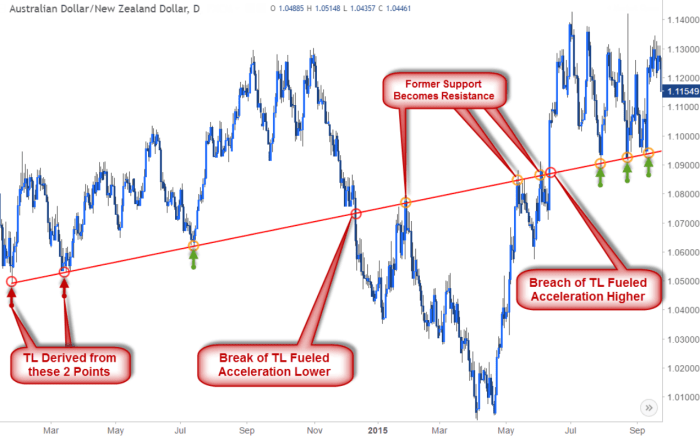
Sentiment analysis plays a crucial role in Forex market analysis by gauging the collective emotions, attitudes, and expectations of market participants. This information helps traders understand the market’s overall sentiment and make informed trading decisions.
Sentiment Indicators
Several sentiment indicators provide valuable insights into market sentiment. One widely used indicator is the Commitment of Traders (COT) report, which tracks the positions of large speculators, such as hedge funds and commodity trading advisors. By analyzing the COT report, traders can gain insights into the market’s overall positioning and potential shifts in sentiment.
Another popular sentiment indicator is the CNN Fear & Greed Index, which measures market sentiment on a scale of 0 to 100, with 0 representing extreme fear and 100 representing extreme greed. This index helps traders gauge the level of risk aversion or risk appetite in the market.
Sentiment and Market Trends
Market sentiment can significantly influence market trends. When sentiment is bullish, traders are generally optimistic about the market’s future direction, leading to increased buying pressure and potentially driving prices higher. Conversely, when sentiment is bearish, traders are pessimistic, leading to increased selling pressure and potentially driving prices lower.
Trading Opportunities
Sentiment analysis can help traders identify potential trading opportunities. For example, a shift from extreme fear to moderate fear or greed could signal a potential market reversal, providing an opportunity for traders to enter or exit positions accordingly.
By incorporating sentiment analysis into their trading strategies, traders can gain a deeper understanding of market dynamics and make more informed trading decisions, potentially improving their chances of success in the Forex market.
Forex Market Analysis Trend: Mastering Risk Management

The Forex market, with its alluring promise of substantial gains, often conceals the inherent risks that lurk beneath its surface. Navigating these treacherous waters requires a comprehensive understanding of risk management strategies, enabling traders to navigate market uncertainties with greater confidence and resilience.
Risk Management in Forex Trading: A Critical Compass
Risk management is the cornerstone of successful Forex trading, a shield that protects traders from the ever-present perils of market volatility. It involves identifying, assessing, and mitigating potential risks, ensuring that trading decisions are informed and calculated, not driven by impulsive emotions or blind optimism.
Strategies for Navigating the Forex Maze
Forex traders have a wealth of risk management strategies at their disposal, each tailored to their unique risk appetite and trading style. Some commonly employed strategies include:
- Stop-Loss Orders: These orders act as automated safeguards, automatically closing trades when predetermined loss thresholds are reached, limiting potential losses and preventing catastrophic outcomes.
- Leverage: A double-edged sword, leverage can magnify both profits and losses. Prudent use of leverage, however, can enhance returns while minimizing risk exposure.
- Diversification: Spreading investments across various currency pairs and asset classes reduces portfolio risk by minimizing exposure to any single market or economic event.
Unveiling the Risks of Forex Trading
The Forex market, while presenting lucrative opportunities, also harbors a multitude of risks that traders must be cognizant of. These risks can be broadly categorized into three main types:
- Market Risk: The inherent volatility of currency values poses a constant threat to traders, as sudden shifts in market sentiment can lead to substantial losses.
- Credit Risk: This risk arises from the possibility that a counterparty in a Forex transaction may default on their obligations, resulting in financial losses for the trader.
- Liquidity Risk: The Forex market, while vast and active, can experience periods of low liquidity, making it challenging to execute trades at desired prices or exit positions in a timely manner.
Forex Trading Strategies: A Guide to Choosing the Right Approach

The dynamic nature of the Forex market presents traders with diverse opportunities to capitalize on price movements. Understanding and selecting the appropriate trading strategy is crucial for achieving consistent success in this fast-paced financial arena. In this comprehensive guide, we will explore various Forex trading strategies, their pros and cons, and the importance of backtesting before implementation.
Trading Strategies in Forex: An Overview
Forex trading strategies encompass a wide range of approaches that traders employ to navigate market fluctuations and make profitable trades. These strategies vary in complexity, time horizon, and risk tolerance, catering to the unique needs and preferences of individual traders.
Some of the most commonly used trading strategies include scalping, day trading, swing trading, and trend trading.
Scalping: Quick Profits, High-Risk Rewards
Scalping involves taking advantage of small price movements over short periods, typically within minutes or seconds. Scalpers aim to capture quick profits by entering and exiting trades rapidly, often multiple times throughout the day. While scalping can be lucrative, it requires lightning-fast execution, intense focus, and the ability to withstand high levels of stress.
Day Trading: Intraday Opportunities, Limited Exposure
Day trading involves buying and selling currency pairs within the same trading day, with the goal of profiting from short-term price fluctuations. Day traders typically close all positions before the market closes, limiting their exposure to overnight risks. This strategy demands a deep understanding of market dynamics, quick decision-making, and the ability to manage emotions under pressure.
Swing Trading: Capturing Medium-Term Trends
Swing trading seeks to identify and capitalize on medium-term price trends, typically lasting from a few days to several weeks. Swing traders aim to ride the wave of these trends, entering and exiting trades at key points to maximize profits.
This strategy requires patience, the ability to identify market trends, and the discipline to stay invested until the trend reverses.
Trend Trading: Riding the Momentum
Trend trading involves identifying and trading in the direction of prevailing market trends. Trend traders seek to capture significant price movements by holding positions for extended periods, sometimes even months. This strategy emphasizes the importance of understanding market sentiment, recognizing trend reversals, and managing risk effectively.
Choosing the Right Strategy: A Personal Journey
The choice of trading strategy is a highly personal decision, influenced by a multitude of factors, including risk tolerance, time availability, and psychological makeup. Scalping, day trading, swing trading, and trend trading each offer unique advantages and drawbacks. Traders must carefully assess their individual strengths and weaknesses, as well as their financial goals and risk appetite, to select the strategy that best aligns with their trading style and personality.
Backtesting and Forward Testing: Validating Strategies Before Execution
Before implementing any trading strategy in live trading, it is essential to conduct rigorous backtesting and forward testing to assess its performance and validity. Backtesting involves applying the strategy to historical data to evaluate its profitability and risk profile. Forward testing involves simulating the strategy on real-time data to assess its effectiveness in current market conditions.
These testing phases help traders refine their strategies, identify potential weaknesses, and gain confidence in their chosen approach before risking real capital.
Closing Summary

As we conclude our exploration of Forex market analysis trends, it becomes evident that this dynamic and ever-changing realm offers both immense opportunities and inherent risks. By embracing a comprehensive approach that encompasses technical, fundamental, and sentiment analysis, traders can gain a deeper understanding of market dynamics and position themselves to make informed trading decisions.
The key lies in continuous learning, diligent risk management, and the ability to adapt to the ever-shifting landscape of the Forex market. Whether you’re a seasoned trader or just starting your journey into the world of currency trading, remember that knowledge is your most valuable asset.
Keep your finger on the pulse of the market, stay abreast of economic and political developments, and never cease to explore the nuances of Forex market analysis.
