
The humble pan, a culinary workhorse, holds the power to transform simple ingredients into delicious meals. From the sizzling sear of a perfectly cooked steak to the gentle simmer of a creamy sauce, pan cooking offers a world of culinary possibilities.
Whether you’re a seasoned chef or a kitchen novice, understanding the fundamentals of pan cooking can elevate your cooking game and unlock a new level of culinary creativity.
This guide delves into the essential techniques, equipment, and recipes that will empower you to confidently create a symphony of flavors in your own kitchen. From the basics of heat control and pan selection to exploring diverse cuisines and innovative recipes, we’ll equip you with the knowledge and inspiration to become a pan cooking pro.
Pan Cooking Techniques
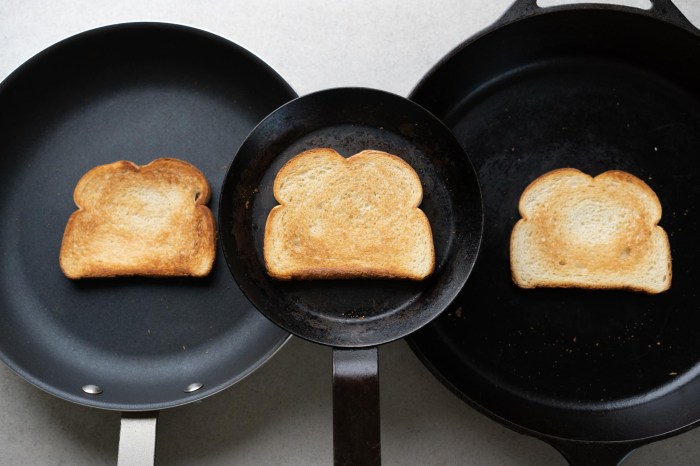
Pan cooking is a versatile and essential culinary technique that involves cooking food in a pan over direct heat. It encompasses a range of methods, each with its unique characteristics and applications. Mastering these techniques is fundamental to achieving delicious and perfectly cooked meals.
Let’s delve into the most common pan cooking techniques and explore their nuances.
Sauteing
Sauteing is a fast and efficient cooking method that involves cooking food in a small amount of fat over medium-high heat. The goal is to quickly cook the food while maintaining its moisture and flavor. Sauteing is ideal for tender ingredients like vegetables, seafood, and thin cuts of meat.
- Heat Level:Medium-high heat
- Cooking Time:Short, typically a few minutes
- Ingredients:Vegetables, seafood, thin cuts of meat, mushrooms, and herbs
- Advantages:Quick cooking time, preserves moisture, enhances flavor
- Disadvantages:Requires constant attention, can be difficult to cook evenly
Stir-Frying
Stir-frying is a high-heat cooking technique originating from Chinese cuisine. It involves cooking food quickly in a wok or large skillet over high heat, constantly tossing and stirring the ingredients. This method results in tender, flavorful dishes with a slight crispness.
- Heat Level:High heat
- Cooking Time:Very short, typically a few minutes
- Ingredients:Vegetables, meat, tofu, noodles, and sauces
- Advantages:Fast cooking time, creates a crispy texture, develops intense flavors
- Disadvantages:Requires experience and skill, can be challenging for beginners
Pan-Frying
Pan-frying is a versatile technique that involves cooking food in a moderate amount of fat over medium heat. It’s suitable for a wide range of ingredients, including thicker cuts of meat, poultry, fish, and vegetables.
- Heat Level:Medium heat
- Cooking Time:Moderate, depending on the thickness of the food
- Ingredients:Thick cuts of meat, poultry, fish, vegetables, and some seafood
- Advantages:Creates a crispy exterior, develops rich flavor, versatile technique
- Disadvantages:Requires more time than sauteing, can be prone to overcooking
Searing
Searing is a high-heat cooking technique used to create a crispy, flavorful crust on the surface of meat or poultry. It involves cooking the food over high heat for a short period, resulting in a caramelized exterior and a juicy interior.
- Heat Level:Very high heat
- Cooking Time:Short, typically a few minutes per side
- Ingredients:Meat, poultry, and some vegetables
- Advantages:Creates a flavorful crust, enhances the taste of meat
- Disadvantages:Requires a hot pan, can be difficult to control
Comparing Pan Cooking Techniques
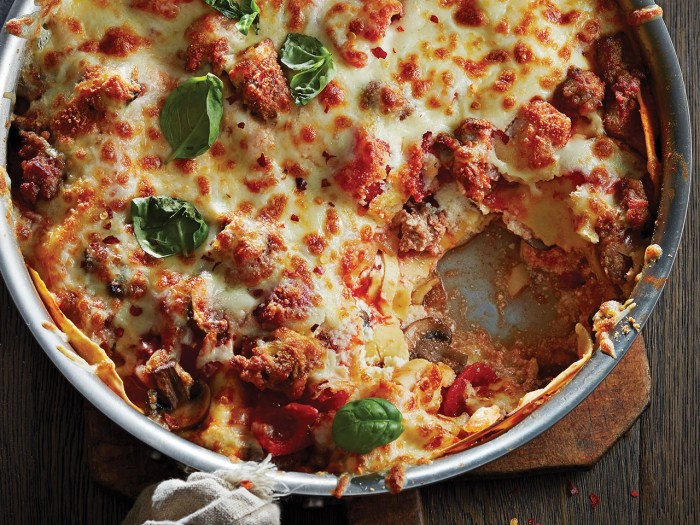
| Technique | Heat Level | Cooking Time | Ingredients | Advantages | Disadvantages |
|---|---|---|---|---|---|
| Sauteing | Medium-high | Short | Tender ingredients | Quick, preserves moisture, enhances flavor | Requires attention, uneven cooking |
| Stir-Frying | High | Very short | Vegetables, meat, tofu, noodles | Fast, crispy texture, intense flavors | Requires skill, challenging for beginners |
| Pan-Frying | Medium | Moderate | Thicker cuts of meat, poultry, fish | Crispy exterior, rich flavor, versatile | More time than sauteing, overcooking risk |
| Searing | Very high | Short | Meat, poultry | Flavorful crust, enhances meat taste | Hot pan needed, difficult to control |
Heating a Pan and Controlling Temperature
Properly heating a pan and controlling the cooking temperature is crucial for successful pan cooking. Here’s a step-by-step guide for beginners:
- Choose the right pan:Select a pan that’s appropriate for the cooking technique and the amount of food you’re preparing.
- Heat the pan:Place the pan over the heat source and allow it to heat up for a few minutes. You can test if the pan is hot enough by adding a drop of water; it should sizzle and evaporate immediately.
- Add the fat:Once the pan is hot, add the desired amount of fat, such as oil or butter.
- Monitor the temperature:Use a thermometer or visually assess the heat level. For sauteing and stir-frying, the pan should be very hot. For pan-frying, the heat should be moderate. For searing, the pan should be extremely hot.
- Adjust the heat:If the pan is too hot, reduce the heat. If the pan is not hot enough, increase the heat.
- Cook the food:Once the pan and fat are hot, add the food and cook according to the recipe instructions.
- Maintain the temperature:Monitor the heat throughout the cooking process and adjust it as needed to ensure even cooking.
Essential Pan Cooking Equipment
Having the right tools and equipment is essential for successful pan cooking. From the pan itself to spatulas and tongs, each piece plays a vital role in achieving delicious results. Let’s explore the essential pan cooking equipment and their importance.
Types of Pans

The pan you choose will significantly impact your cooking experience. Different types of pans are designed for specific purposes and offer unique advantages and disadvantages.
- Stainless Steel Pans:Durable, heat evenly, and are suitable for a wide range of cooking techniques. However, they can be prone to sticking and require proper seasoning.
- Cast Iron Pans:Heavy-duty and excellent heat retention, perfect for searing and slow cooking. They require seasoning and care but develop a natural nonstick surface over time.
- Nonstick Pans:Easy to clean and prevent food from sticking. They are ideal for delicate ingredients and quick cooking methods. However, they are not as durable as other pans and can scratch easily.
- Copper Pans:Excellent heat conductivity and distribution, resulting in even cooking. They are expensive and require careful maintenance.
Visual Guide to Pans
Here’s a visual guide showcasing different types of pans and their ideal uses:
- Skillet:A versatile pan with a wide, flat bottom, suitable for sauteing, pan-frying, and stir-frying.
- Wok:A round-bottomed pan with high sides, ideal for stir-frying and creating flavorful dishes with a crispy texture.
- Dutch Oven:A heavy-duty pot with a tight-fitting lid, perfect for braising, stewing, and slow cooking.
- Sauté Pan:A shallow pan with sloped sides, designed for sauteing and browning food quickly.
- Cast Iron Skillet:A heavy-duty skillet with excellent heat retention, ideal for searing meat and cooking over high heat.
Essential Pan Cooking Tools
Beyond the pan, other essential tools will enhance your pan cooking experience.
- Spatulas:Used for flipping, stirring, and scraping food from the pan. Choose spatulas made from heat-resistant materials like silicone or nylon.
- Tongs:Ideal for lifting, turning, and transferring food without piercing it. Look for tongs with a good grip and a heat-resistant handle.
- Thermometer:Essential for monitoring the temperature of the pan and the food. A digital thermometer provides accurate readings.
- Whisk:Useful for blending sauces, whisking eggs, and incorporating ingredients.
- Ladle:Used for transferring liquids and sauces.
- Wooden Spoons:Great for stirring and scraping food from the pan. They are gentle on nonstick surfaces.
Pan Cooking Recipes and Inspirations
Pan cooking offers endless possibilities for creating delicious and satisfying meals. From simple weeknight dinners to elaborate gourmet dishes, the pan is a versatile tool in any kitchen. Let’s explore a variety of pan cooking recipes that will inspire your culinary adventures.
Vegetarian and Vegan Pan Cooking Recipes
Pan cooking is a fantastic way to create flavorful vegetarian and vegan dishes. Here are a few examples:
- Sautéed Vegetables with Garlic and Herbs:A simple and healthy side dish that can be customized with your favorite vegetables.
- Pan-Fried Tofu with Ginger and Soy Sauce:A delicious and protein-rich main course that’s perfect for stir-fries and noodle dishes.
- Mushroom Stroganoff:A creamy and savory dish that’s a comforting alternative to traditional stroganoff.
- Roasted Vegetable Curry:A flavorful and aromatic curry that can be made with a variety of vegetables.
Meat-Based Pan Cooking Recipes
For meat lovers, pan cooking offers a variety of options for creating juicy and flavorful dishes.
- Pan-Seared Steak with Garlic Butter:A classic dish that’s perfect for a special occasion.
- Chicken Stir-Fry with Peanut Sauce:A quick and easy meal that’s packed with flavor.
- Crispy Skin Salmon with Lemon and Dill:A healthy and delicious fish dish that’s perfect for a light meal.
- Braised Short Ribs with Red Wine:A tender and flavorful dish that’s perfect for a cold winter night.
Creating Flavorful Sauces and Glazes
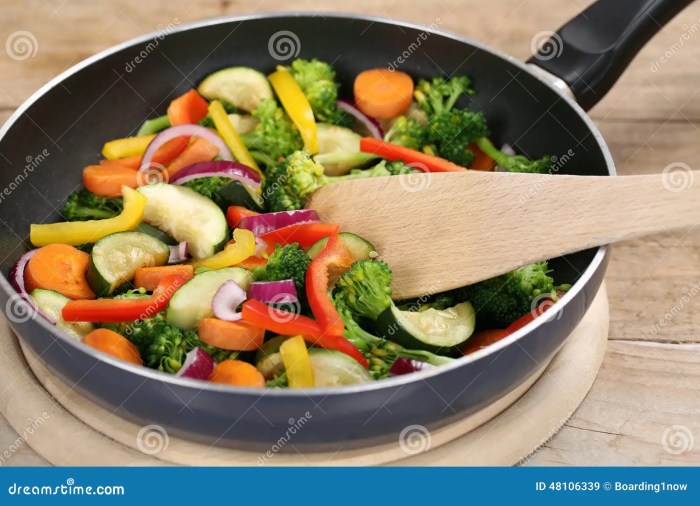
Pan drippings, the flavorful juices left behind after cooking meat or vegetables, can be transformed into delicious sauces and glazes. Simply deglaze the pan by adding a liquid like wine, broth, or vinegar and scraping up the browned bits. Reduce the liquid to thicken the sauce and add seasonings to enhance the flavor.
Pan Cooking Recipes for Everyday Meals and Special Occasions
| Dish | Ingredients | Cooking Time |
|---|---|---|
| Sautéed Shrimp with Garlic and Lemon | Shrimp, garlic, lemon juice, olive oil, salt, pepper | 10-15 minutes |
| Pan-Fried Chicken with Honey-Soy Glaze | Chicken breasts, honey, soy sauce, ginger, garlic, sesame oil | 20-25 minutes |
| Mushroom and Spinach Quiche | Mushrooms, spinach, eggs, milk, cheese, pie crust | 40-45 minutes |
| Braised Beef Short Ribs with Carrots and Potatoes | Beef short ribs, carrots, potatoes, red wine, beef broth, herbs | 2-3 hours |
Summary

With a little practice and a dash of culinary confidence, you’ll be well on your way to mastering the art of pan cooking. Embrace the simplicity, versatility, and deliciousness that this essential cooking method offers. From quick weeknight dinners to impressive special occasion meals, pan cooking provides a foundation for culinary creativity and a gateway to a world of flavorful possibilities.
Q&A
What are the best types of pans for beginners?
For beginners, a good quality nonstick pan and a stainless steel pan are excellent choices. The nonstick pan is great for eggs, delicate fish, and vegetables, while the stainless steel pan is versatile for searing, sauteing, and browning.
How do I know when my pan is hot enough?
A simple test is to sprinkle a few drops of water into the pan. If the water sizzles and evaporates quickly, the pan is ready. You can also use a thermometer to check the temperature, aiming for the appropriate range for your chosen cooking technique.
What are some easy pan cooking recipes for beginners?
Simple pan-fried chicken breast with lemon and herbs, sauteed vegetables with garlic and olive oil, or a classic omelet are all excellent beginner-friendly recipes. Experiment with different flavors and spices to create your own culinary masterpieces.
